The Scale and Impact of Food Waste
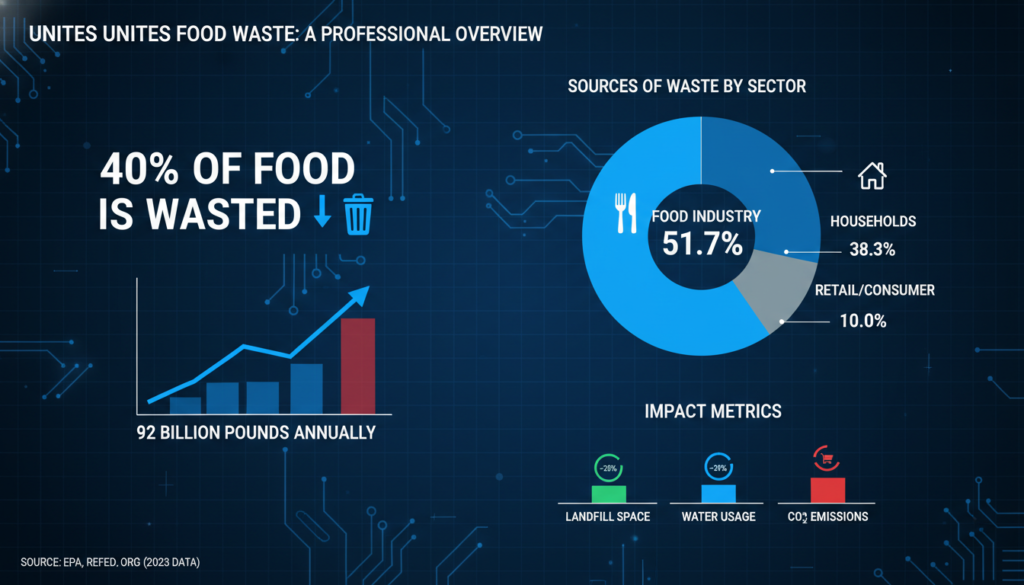
“Food Waste in the United States …” from ballardbrief.byu.edu and used with no modifications.
The United States generates almost 115 billion meals’ worth of food go unsold or uneaten each year, roughly 1.3% of U.S. GDP [1].
This waste represents not only lost nutritional value but also significant environmental impacts. When food decomposes in landfills, it produces methane, a greenhouse gas with 80 times the warming potential of CO₂ over a 20-year period [2] and still over 30 times over the much longer term.
Food waste accounts for approximately 8% of global greenhouse gas emissions (UNFCC), making it a critical focus area for climate mitigation strategies.
For waste management facilities, food waste presents specific operational challenges due to its high moisture content, rapid decomposition rate, and potential for contamination of other recyclable streams. The EPA’s waste hierarchy prioritises source reduction and food rescue before recycling through composting or anaerobic digestion, with landfill disposal as the least preferred option [3].
Understanding this hierarchy is essential for developing comprehensive food waste reduction strategies that align with regulatory frameworks and sustainability goals.
| Waste Management Method | GHG Impact (CO₂e/ton) | Resource Recovery Potential | Operational Complexity |
| Landfill (no gas capture) | 2.5-3.8 | None | Low |
| Landfill (with gas capture) | 1.2-1.5 | Energy (partial) | Medium |
| Composting | 0.4-0.7 | Soil amendment | Medium |
| Anaerobic Digestion | -0.2 to -0.8 | Energy + soil amendment | High |
Recent analysis from ReFED indicates that implementing comprehensive food waste reduction strategies could divert over 20 million tons of food waste from landfills annually in the United States, generating an estimated $59 billion in economic value [4].
For waste management facilities, this represents both a challenge and an opportunity to develop new operational models and revenue streams.
Source Reduction and Separation Strategies
Commercial Source Separation Implementation
For commercial food waste generators such as restaurants, grocery stores, and institutional kitchens, implementing effective source separation systems requires addressing several technical considerations:
- Waste Audit Protocols: Standardized waste characterization methodologies can identify specific food waste streams and optimization opportunities. The Food Loss and Waste Protocol provides internationally recognized quantification methods that can be adapted for facility-level analysis [6].
- Container Systems: Specialized containers with appropriate ventilation, leak prevention, and ergonomic design can significantly improve separation compliance. Studies indicate that color-coding and clear signage can reduce contamination rates by up to 65% [7].
- Staff Training Programs: Technical training for staff should address specific operational procedures, contamination identification, and the downstream impacts of improper separation. Regular reinforcement and performance monitoring are critical for maintaining separation quality.
- Collection Logistics: Collection frequency must be optimized based on waste volume, composition, and local climate conditions to minimize odor and vector issues while maintaining economic efficiency.
Optimize Your Source Separation Program
Access our comprehensive Food Waste Audit Toolkit, including standardized protocols, data collection templates, and analysis tools designed specifically for waste management professionals.
Municipal Program Design Considerations
Municipal food waste collection programs face unique challenges related to scale, participation rates, and contamination management. Technical analysis of successful programs reveals several critical design elements:
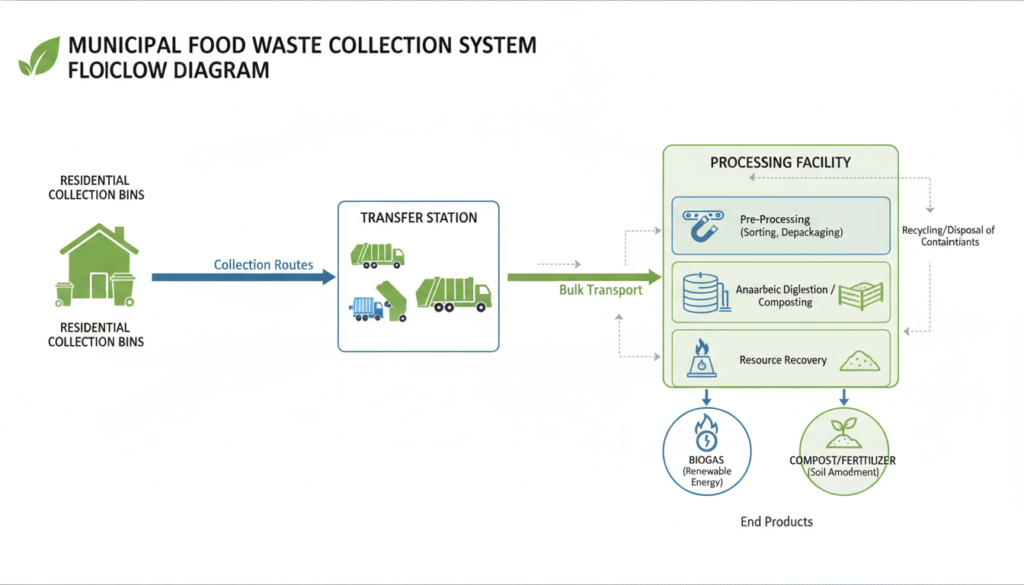
Collection System Parameters
- Container Specifications: Ventilated containers with secure lids have demonstrated 30-45% reduction in odor complaints compared to standard containers [8].
- Collection Frequency: Weekly collection balances cost considerations with sanitation requirements in most climate zones, though bi-weekly collection may be viable in cooler regions with appropriate container design.
- Vehicle Technology: Specialized collection vehicles with leachate containment systems and compaction capabilities optimized for organic materials can improve collection efficiency by 15-25% [9].
Participation Optimization
- Regulatory Frameworks: Mandatory participation policies have demonstrated 40-60% higher diversion rates compared to voluntary programs [10].
- Economic Incentives: Variable rate structures (Pay-As-You-Throw) that provide cost advantages for food waste separation have shown 25-35% increases in diversion rates [11].
- Education Protocols: Technical education materials focused on specific separation requirements and contamination prevention have proven more effective than general environmental messaging.
Analysis of high-performing municipal programs indicates that achieving contamination rates below 10% requires ongoing monitoring and feedback mechanisms. Implementing RFID tracking systems for collection containers can enable targeted intervention for generators with persistent contamination issues [12].
Processing Technologies and Operational Parameters
The selection and optimization of food waste processing technologies must consider feedstock characteristics, operational requirements, and end product specifications. This technical analysis examines the primary processing pathways for diverted food waste.
Composting Systems Engineering
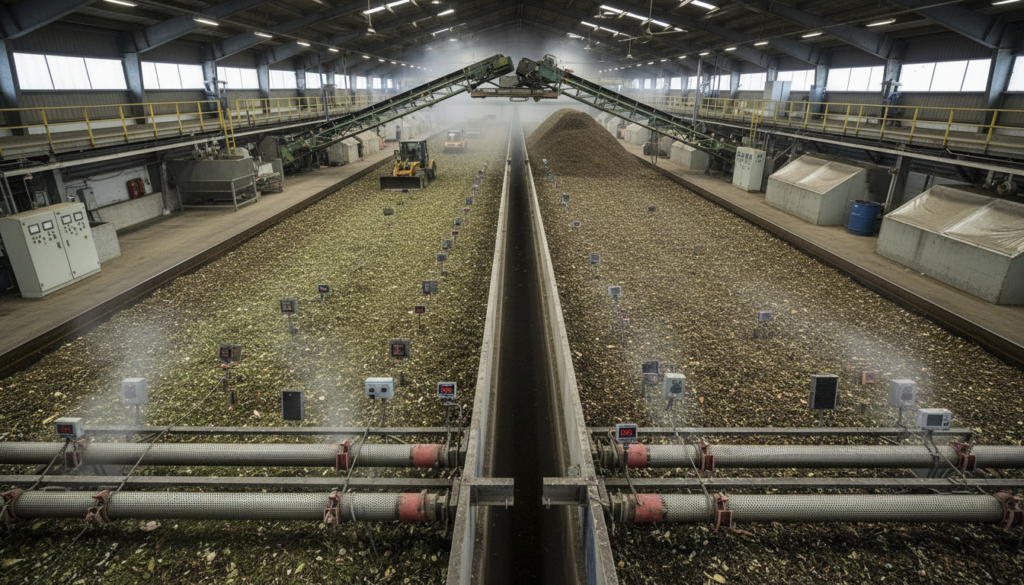
Composting remains the most widely implemented food waste processing technology due to its scalability and relatively low capital requirements. However, optimizing composting operations for food waste requires specific technical considerations:
- Aeration Parameters: Food waste typically requires higher aeration rates (15-25 m³/hr/ton) compared to yard waste due to higher nitrogen content and moisture levels [13]. Insufficient aeration leads to anaerobic conditions and associated odor issues.
- Carbon:Nitrogen Ratios: Optimal C:N ratios for food waste composting range from 25:1 to 30:1, requiring precise blending with carbon-rich bulking agents such as wood chips or yard waste [14].
- Moisture Management: Food waste typically enters the composting process with 70-80% moisture content, requiring careful management to maintain the optimal 55-65% range throughout the active composting phase [15].
- Temperature Control Protocols: Pathogen reduction requires maintaining temperatures above 55°C for a minimum of 3 days in aerated static pile or in-vessel systems, or 15 days with 5 turnings for windrow systems, per EPA Part 503 regulations [16].
Advanced monitoring systems utilizing wireless temperature probes, oxygen sensors, and moisture meters can provide real-time data for process optimization. Implementation of these systems has demonstrated 15-30% reductions in processing time and significant improvements in odor management [17].
Anaerobic Digestion System Design
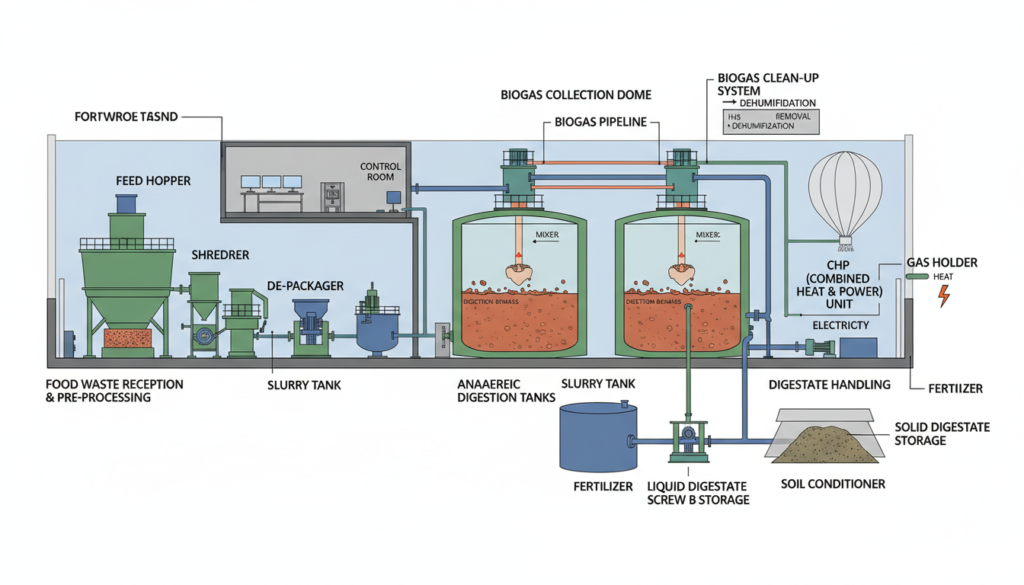
Anaerobic digestion (AD) offers advantages for food waste processing, including energy recovery and reduced footprint requirements. Technical considerations for AD system design include:
Pre-treatment Requirements
- Contamination Removal: Physical pre-treatment systems must achieve contamination levels below 0.5% for optimal digester operation and digestate quality [18].
- Particle Size Reduction: Optimal particle size ranges from 10-40mm depending on digester type, with smaller particles accelerating hydrolysis rates [19].
- Homogenization: Consistent feedstock characteristics are critical for stable digester operation, requiring effective blending systems for variable food waste inputs.
Operational Parameters
- Loading Rates: Optimal organic loading rates for food waste range from 2-4 kg VS/m³/day for wet systems and 4-8 kg VS/m³/day for high-solids systems [20].
- Hydraulic Retention Time: Typical HRT ranges from 15-30 days depending on system design and operating temperature [21].
- Biogas Management: Food waste typically yields 100-150 m³ biogas per ton, with methane content ranging from 60-70%, requiring appropriate gas handling and utilization systems [22].
Co-digestion of food waste with wastewater biosolids has demonstrated synergistic benefits, including 30-50% increases in biogas production compared to mono-digestion [23]. This approach requires careful attention to mixing ratios and potential impacts on digestate quality.
Optimize Your Processing Technology
Request our technical assessment service to evaluate your facility’s specific conditions and determine the optimal processing technology configuration for your food waste streams.
Economic Analysis and Business Model Development
Developing financially sustainable food waste reduction programs requires comprehensive economic analysis and innovative business models. This section examines the economic parameters and revenue opportunities associated with food waste diversion.
Cost Structure Analysis
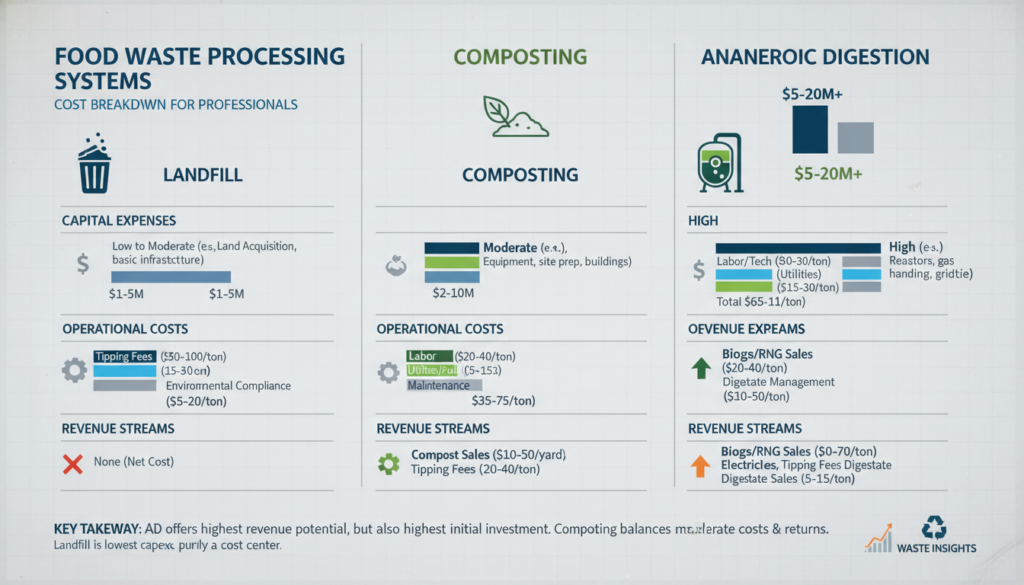
The economic viability of food waste reduction initiatives depends on accurately accounting for all cost components and identifying optimization opportunities. Key cost categories include:
| Cost Category | Composting ($/ton) | Anaerobic Digestion ($/ton) | Cost Optimization Strategies |
| Collection | 45-75 | 45-75 | Route optimization, automated collection systems |
| Pre-processing | 10-25 | 25-40 | Improved source separation, equipment efficiency |
| Processing | 30-60 | 50-90 | Scale optimization, process automation |
| Residual Management | 5-15 | 10-20 | Contamination reduction, beneficial reuse |
| Total Processing Cost | 90-175 | 130-225 | Integrated system optimization |
Analysis of high-performing facilities indicates that economies of scale are significant, with per-ton processing costs decreasing by approximately 30-40% as facility capacity increases from 5,000 to 50,000 tons per year [24]. Regional variations in labor, energy, and regulatory compliance costs can significantly impact overall economics.
Revenue Stream Development
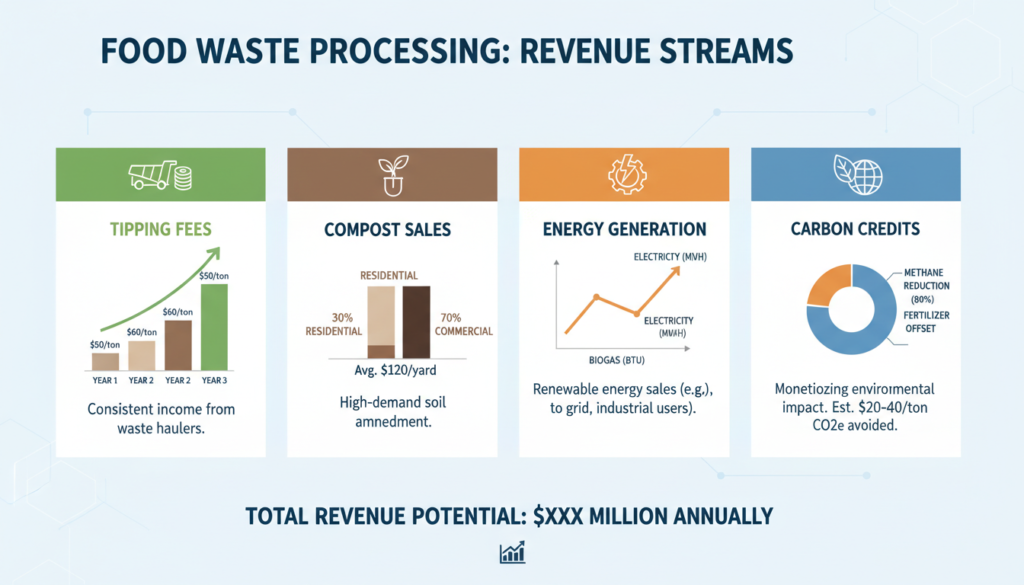
Diversifying revenue streams is critical for financial sustainability. Advanced food waste reduction programs typically incorporate multiple revenue sources:
- Tipping Fee Optimization: Differential tipping fee structures based on contamination levels can incentivize improved source separation while maximizing revenue. Analysis indicates that a 20-30% premium for clean, source-separated food waste is economically justified based on processing efficiency improvements [25].
- Product Marketing: High-quality compost derived from food waste can command premium prices in specialized markets such as organic agriculture, urban landscaping, and green infrastructure applications. Developing product specifications and certification programs can increase market value by 50-100% compared to undifferentiated products [26].
- Energy Revenue: Biogas from anaerobic digestion can generate revenue through electricity production, renewable natural gas (RNG) upgrading, or combined heat and power applications. RNG production with pipeline injection has demonstrated the highest value proposition, with potential revenues of $5-15 per MMBtu depending on environmental attribute values [27].
- Carbon Credit Generation: Avoided methane emissions from food waste diversion can qualify for carbon credits under various protocols. Projects have demonstrated potential revenue of $10-30 per ton of food waste diverted, depending on market conditions and verification methodology [28].
Developing public-private partnerships can enhance economic viability through shared infrastructure investments, guaranteed feedstock agreements, and long-term product procurement commitments. These partnerships have demonstrated 15-25% improvements in project financial performance compared to standalone private or public operations [29].
Implementation Case Studies and Best Practices
Examining successful food waste reduction implementations provides valuable insights for waste management professionals. The following case studies highlight key technical and operational lessons from diverse settings.
Municipal Program Implementation: King County, Washington
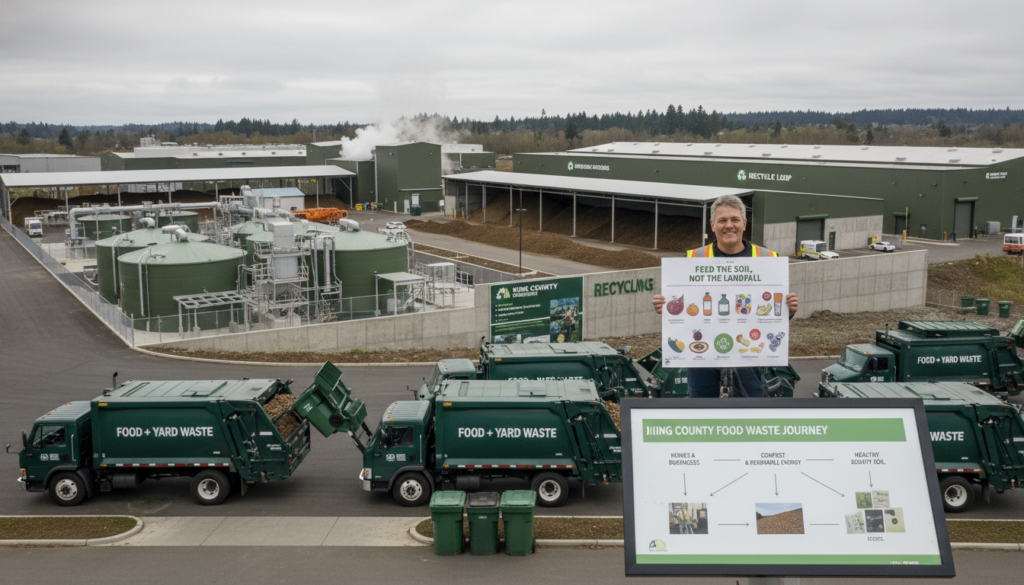
King County implemented a comprehensive food waste diversion program that achieved a 57% diversion rate within three years of implementation. Key technical elements included:
- Phased Implementation: The program began with commercial generators, followed by multi-family housing, and finally single-family residential collection. This approach allowed for optimization of collection and processing systems before scaling to more challenging sectors.
- Processing Capacity Development: The county utilized a public-private partnership model to develop processing infrastructure, with long-term processing agreements providing financial stability for facility investments.
- Contamination Management Protocol: A three-tiered enforcement system with progressive education, warning, and rejection protocols reduced contamination rates from initial levels of 15-20% to sustained levels below 5% [30].
- Technical Assistance Program: Dedicated technical specialists provided on-site consultation for commercial generators, developing customized separation systems and staff training programs.
The program’s economic analysis demonstrated net-positive financial performance when accounting for avoided disposal costs, with a benefit-cost ratio of 1.3:1 over a 10-year analysis period [31].
Commercial Generator Implementation: Healthcare Sector
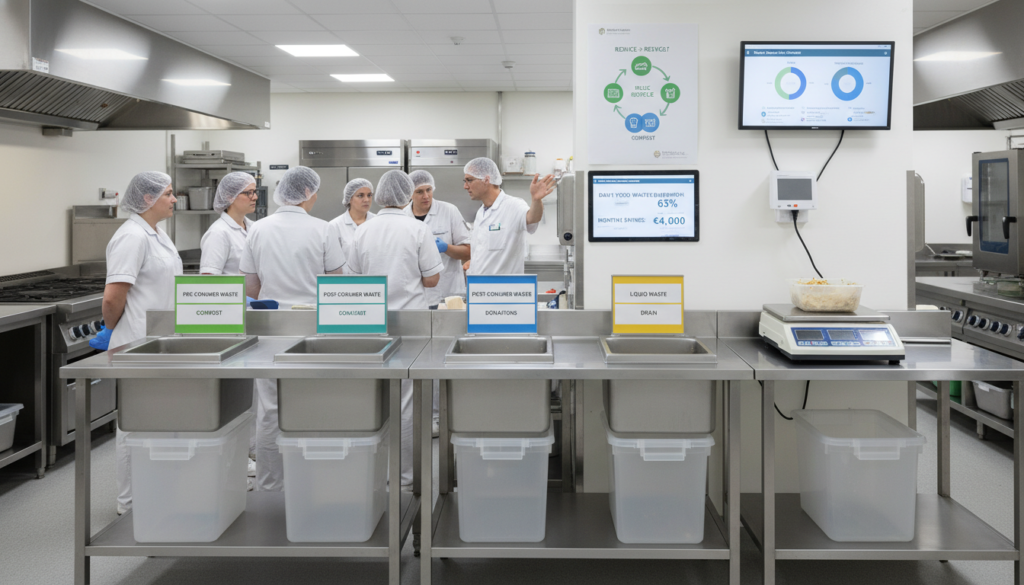
A network of 15 hospitals implemented a coordinated food waste reduction program that achieved a 35% absolute reduction in food waste generation and 85% diversion of remaining waste. Technical elements included:
- Standardized Measurement Protocol: Implementation of the Food Loss and Waste Protocol methodology with specialized healthcare metrics enabled consistent tracking and benchmarking across facilities.
- Menu Engineering: Data-driven menu optimization reduced overproduction while maintaining nutritional standards and patient satisfaction metrics.
- Specialized Collection Infrastructure: Decentralized collection stations with color-coded containers and clear signage were strategically located to maximize staff compliance.
- Integrated Technology Systems: Digital tracking systems linked food production, patient ordering, and waste measurement data to identify specific reduction opportunities.
The program demonstrated an average return on investment of 196% with a payback period of 1.5 years, primarily through reduced food purchasing costs and lower waste disposal expenses [32].
Access Detailed Case Studies
Download our comprehensive case study collection featuring detailed technical specifications, implementation timelines, and performance metrics from successful food waste reduction programs.
Regulatory Framework and Compliance Strategies
Navigating the evolving regulatory landscape for food waste management requires understanding current requirements and anticipating future developments. This section examines key regulatory considerations for waste management professionals.
State-Level Organic Waste Bans and Mandates
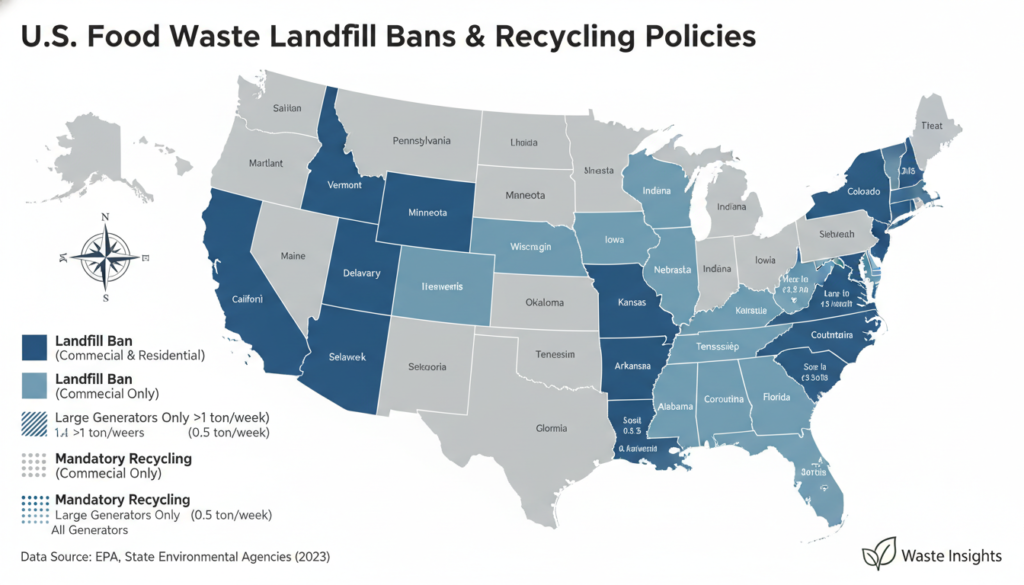
Currently, seven states (California, Connecticut, Massachusetts, New York, Rhode Island, Vermont, and Washington) have implemented organic waste disposal bans or mandatory recycling laws for food waste. These regulations vary significantly in scope, applicability thresholds, and enforcement mechanisms [33].
| State | Applicability Threshold | Distance Exemption | Key Compliance Requirements |
| California (SB 1383) | All generators | None | Mandatory collection, contamination monitoring, procurement targets |
| Massachusetts | 1 ton/week | 20 miles | Waste ban, annual compliance certification |
| New York | 2 tons/week | 25 miles | Mandatory source separation, annual reporting |
| Vermont | All generators | 20 miles | Universal recycling law, phased implementation |
Analysis of implementation data indicates that states with comprehensive technical assistance programs and phased implementation timelines have achieved higher compliance rates and lower implementation costs for regulated entities [34]. Waste management facilities operating in multiple jurisdictions must develop systems capable of adapting to varying regulatory requirements.
Federal Policy Developments
While no federal food waste disposal ban currently exists, several policy initiatives are relevant for waste management professionals:
- National Food Waste Reduction Goal: The federal target to reduce food waste by 50% by 2030 is driving policy development and funding initiatives at multiple levels [35].
- EPA Excess Food Opportunities Map: This GIS-based resource identifies potential generators and receivers of excess food, supporting infrastructure planning and partnership development [36].
- USDA/EPA Food Recovery Challenge: This voluntary program provides technical assistance and recognition for organizations implementing food waste reduction programs [37].
- Biogas Opportunities Roadmap: This interagency initiative identifies strategies to overcome barriers to biogas development, including food waste-to-energy projects [38].
Monitoring these federal initiatives is essential for strategic planning and positioning waste management operations to leverage potential funding and technical assistance resources.
Conclusion and Implementation Roadmap
Implementing effective food waste reduction strategies requires a systematic approach that addresses technical, operational, and economic considerations. Based on the analysis presented in this article, waste management professionals should consider the following implementation roadmap:
- Baseline Assessment: Conduct comprehensive waste characterization studies to quantify food waste volumes, composition, and sources within your service area.
- Infrastructure Evaluation: Assess existing collection and processing infrastructure to identify capacity gaps and optimization opportunities.
- Stakeholder Engagement: Develop collaborative relationships with key stakeholders, including waste generators, regulators, and potential end-product markets.
- Pilot Program Development: Implement targeted pilot programs to test collection methodologies, processing technologies, and education strategies before full-scale deployment.
- Comprehensive Program Design: Develop integrated programs that address the entire food waste management system, from generation reduction to end-product utilization.
- Monitoring and Optimization: Implement robust data collection and analysis systems to continuously improve program performance and economic outcomes.
Food waste reduction represents a significant opportunity for waste management professionals to develop new service offerings, improve environmental performance, and enhance financial sustainability. By implementing the technical strategies outlined in this article, facilities can position themselves as leaders in this rapidly evolving sector.
Develop Your Food Waste Reduction Strategy
Join our professional network to access technical resources, implementation guides, and peer learning opportunities focused on advanced food waste reduction strategies.
References
- ReFED. (2021). The Challenge: Food Waste in the United States. ReFED.
- IPCC. (2021). Climate Change 2021: The Physical Science Basis. Intergovernmental Panel on Climate Change.
- U.S. EPA. (2021). Food Recovery Hierarchy. United States Environmental Protection Agency.
- ReFED. (2021). Roadmap to 2030: Reducing U.S. Food Waste by 50%. ReFED.
- Sustainability Victoria. (2018). Food Waste Collection Guidelines. Sustainability Victoria.
- World Resources Institute. (2016). Food Loss and Waste Accounting and Reporting Standard. WRI.
- WRAP. (2020). Food Waste Recycling Action Plan. Waste and Resources Action Programme.
- BioCycle. (2019). Residential Food Waste Collection Access in U.S. BioCycle.
- Waste Management. (2020). Sustainable Collection Technology. Waste Management, Inc.
- Massachusetts DEP. (2019). Commercial Food Materials Disposal Ban: 5-Year Program Assessment. Massachusetts Department of Environmental Protection.
- U.S. EPA. (2020). Pay-As-You-Throw Programs. United States Environmental Protection Agency.
- Cascadia Consulting Group. (2020). Food Waste Prevention and Recovery Assessment. Cascadia Consulting Group.
- Cornell Waste Management Institute. (2018). Composting: Science and Engineering. Cornell University.
- Epstein, E. (2011). Industrial Composting: Environmental Engineering and Facilities Management. CRC Press.
- U.S. Composting Council. (2018). Composting Process Management. U.S. Composting Council.
- U.S. EPA. (1994). A Plain English Guide to the EPA Part 503 Biosolids Rule. United States Environmental Protection Agency.
- BioCycle. (2021). Monitoring Compost Moisture, Oxygen and Temperature. BioCycle.
- American Biogas Council. (2019). Anaerobic Digestion Systems. American Biogas Council.
- Cecchi, F., & Cavinato, C. (2019). Anaerobic Digestion of Bio-waste: A Mini-review. Waste Management.
- Water Environment Federation. (2018). Design of Anaerobic Digestion Systems. Water Environment Federation.
- Zhang, C., et al. (2014). Batch and Semi-continuous Anaerobic Digestion of Food Waste in a Dual Solid-Liquid System. Bioresource Technology.
- U.S. EPA. (2020). Basic Information about Landfill Gas. United States Environmental Protection Agency.
- Water Research Foundation. (2017). Co-digestion of Food Waste in Municipal Wastewater Treatment Plants. Water Research Foundation.
- U.S. EPA. (2021). Types of Composting and Understanding the Process. United States Environmental Protection Agency.
- BioCycle. (2018). Food Waste Composting Infrastructure in the U.S. BioCycle.
- U.S. Composting Council. (2020). Seal of Testing Assurance Program. U.S. Composting Council.
- U.S. EPA. (2021). AgSTAR Data and Trends. United States Environmental Protection Agency.
- Climate Action Reserve. (2021). Organic Waste Composting Protocol. Climate Action Reserve.
- U.S. EPA. (2020). Public-Private Partnerships in Waste Management. United States Environmental Protection Agency.
- King County Solid Waste Division. (2019). Food Waste Prevention and Recovery Programs. King County, Washington.
- King County Solid Waste Division. (2020). Organic Materials Management Report. King County, Washington.
- Practice Greenhealth. (2021). Less Food Waste Case Study Series. Practice Greenhealth.
- Harvard Law School Food Law and Policy Clinic. (2021). State Organic Waste Bans and Mandatory Organics Recycling Laws. Harvard Law School.
- California Department of Resources Recycling and Recovery. (2020). SB 1383 Implementation. CalRecycle.
- U.S. EPA & USDA. (2021). U.S. 2030 Food Loss and Waste Reduction Goal. United States Environmental Protection Agency.
- U.S. EPA. (2021). Excess Food Opportunities Map. United States Environmental Protection Agency.
- U.S. EPA. (2021). Food Recovery Challenge. United States Environmental Protection Agency.
- U.S. EPA, USDA, & DOE. (2014). Biogas Opportunities Roadmap. U.S. Department of Energy.